Connection Is Protection: The Relationships That Shape Our Mental Health
Strong relationships don’t just make life more enjoyable—they shape how we see ourselves, how we cope with stress and, ultimately, how we experience the world.
At Helpu, we often talk about the importance of connection. Our belief that Connection Is Protection sits at the heart of everything we do. Whether it’s finding a local support group, talking to a friend, joining a walking group or reaching out for counselling, meaningful relationships can make a profound difference to our wellbeing.
In I’m Fine (But Not Really): What Men Need To Know, Without Going to Therapy, psychotherapist Dr Peter Meadesexplores exactly why relationships matter, how they influence our mental health and what we can do to strengthen them.
In this exclusive extract, reproduced with permission from the publisher, Dr Meades explains why the people around us matter more than we often realise—and why connection isn’t a luxury, but an essential part of living well.
Exclusive Book Extract
We Become Ourselves in Relation to Others
When men complete the timeline exercise in the first insight, reflecting on the best and worst times of their lives, all of the stories inevitably involve other people in one way or another: someone loyal who had their back when life wasn’t easy; someone who unexpectedly broke their trust; a friend who was there for them at a difficult time in their career; a partner who left.
This is unsurprising given that relationships are not just a backdrop to our lives—they are the entire environment in which we live and grow.
Throughout my years in the NHS and in private practice, I’ve observed the same truth emerging over and over. I’ve seen how the quality of our relationships can strengthen, sustain and heal us or drag us down, undermine us and undo us. The network of relationships we find ourselves in profoundly affects how we see ourselves, the world we inhabit and how we behave. It even has an impact on how our bodies handle stress.
From the moment we were born, we’ve been in relationship with other people, and usually part of a wider network of interpersonal connections: parents or primary caregivers, family, friends, neighbours, teachers, partners and colleagues. The way those people have treated you, and the signals they gave about whether you were okay, safe, valued, respected or wanted, will all have left a mark.
The impact others have on us doesn’t end in childhood.
It’s happening now, every day, through the people you spend time with and those in your wider system.
”"Sometimes the strongest act is not holding it all together alone but allowing yourself to find balance and to be calmed in company."
Co-regulation
It’s commonplace for men to be taught that they should look after themselves, sort themselves out or pick themselves up alone. You grit your teeth, try to ignore things or push the feelings away.
Being self-reliant can obviously help a lot sometimes, but our nervous systems are built to regulate in company as well as in solitude. Remarkably, neurobiological research shows that our bodies can help regulate one another’s nervous systems, a process known as co-regulation.
Think of how an infant is calmed when they’re being held, or how your breathing slows down when you sit beside someone who is quiet and grounded. The same principle applies in adult life—a calm and balanced presence changes the rhythm of your own body.
Your heart rate, breathing and muscles respond not only to your own willpower but also to the energy and signals of those around you.
There are a number of simple ways to practise this in daily life, and shared activity is one of them. Watching a film or sport with a friend, walking or hiking side by side with someone, or cooking together all create a co-regulating rhythm that helps both people relax.
Another way is something called paced breathing.
If you sit with someone who’s stressed, slow your own breathing down, speak more slowly and pause a little longer—without any attempt to lecture them or reason with them, and certainly avoiding telling them to “calm down”—their body will often begin to match your pace.
We know that co-regulation also enhances resilience. This is because you are reminded that you’re not alone, not an isolated unit—you are part of a system and you belong.
Relationships that carry calmness help you carry your own calm more effectively, and recognising this can change the way you think about what it means to be strong.
Sometimes the strongest act is not holding it all together alone but allowing yourself to find balance and to be calmed in company.
Why This Matters
Reading this chapter, it’s easy to see why relationships sit at the centre of good mental health.
Many men are taught that strength means coping alone. We tell ourselves to get on with it, keep busy and deal with things ourselves. Yet one of the strongest messages from Dr Meades’ work is that we are shaped by the people around us. Supportive relationships help us through life’s challenges, while isolation, conflict and loss can leave us struggling.
At Helpu, that’s why we believe Connection Is Protection.
Connection doesn’t always mean having lots of friends. Sometimes it’s one trusted person, a weekly walking group, a conversation over coffee, reconnecting with a brother you’ve drifted from, or finding the confidence to speak with a counsellor.
If this extract has made you reflect on your own relationships, perhaps ask yourself:
- Who helps me feel calm and understood?
- Who do I know I can rely on?
- Is there someone I’ve drifted away from who I’d like to reconnect with?
- What small step could I take today?
Sometimes the smallest act of connection can make the biggest difference.
If you’re looking for support, Helpu can help you find local services across Wales through our searchable support directory. If you’re ready to talk, you can also learn more about our Give What You Can Counselling Service, offering confidential online counselling with experienced BACP-accredited counsellors.

About the Book
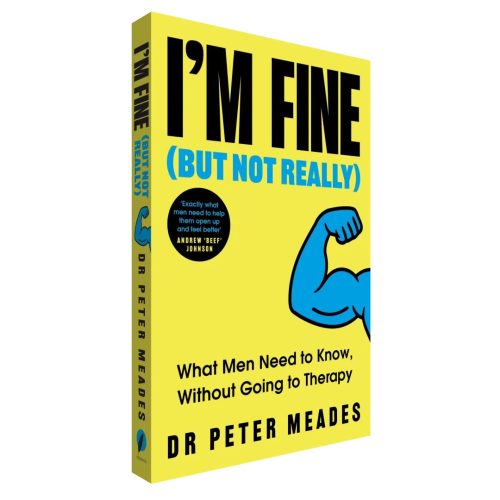
I’m Fine (But Not Really): What Men Need To Know, Without Going to Therapy by Dr Peter Meades is published by Little, Brown.
Drawing on more than 25 years of therapeutic experience, Dr Meades explores identity, relationships, work, purpose and men’s mental wellbeing with warmth, honesty and practical insight. Blending practical exercises with compassionate guidance, the book offers men the opportunity to better understand themselves and the relationships that shape their lives.
If you enjoyed this extract, we encourage you to support the author by purchasing a copy of the book. Link here.
Extract reproduced with permission from Little, Brown.
Written by Ian Smith.
Lead Photo by William Fortunato on Pexels.